Squid Game, a South Korean survival thriller, was made available on Netflix in September 2021. It quickly became a worldwide sensation, reaching the top of streaming charts in over 90 countries and, at the time of its debut, being the most-watched series on the site. The series, which was written and directed by Hwang Dong-hyuk, blends frank social criticism with unvarnished survival drama. Beyond its graphic games and unexpected turns, Squid Game serves as a social mirror, revealing problems with human greed, class conflict, and the price of surviving in a capitalist society.
This review examines Squid Game in further detail, including its plot, characters, acting, themes, cultural influence, and reasons for its enduring appeal to viewers worldwide.
Overview of the Plot (Light Spoilers)
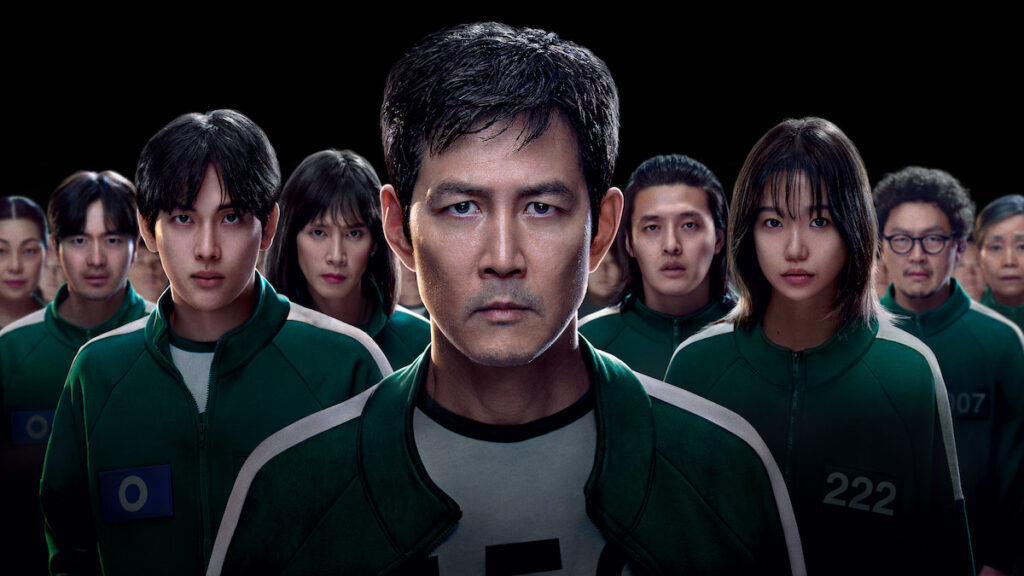
In Squid Game, Lee Jung-jae portrays Seong Gi-hun, a middle-aged guy who is drowning in debt. Desperate, jobless, and estranged from his family, he accepts an invitation to participate in a secret survival tournament that offers a huge financial prize.
Gi-hun quickly discovers that he and 455 other players are ensnared in a lethal sequence of kid-friendly games where losing signifies death. These seemingly harmless playground games, including “Red Light, Green Light” and the notorious tug-of-war, devolve into vicious struggles for survival.
Games that previously represented innocence now stand in for life-or-death situations, demonstrating the show’s masterful blending of terror and nostalgia. Every round reveals the participants’ desperation, alliances, treachery, and moral quandaries in addition to the organizers’ violence.

Personas and Acting
Gi-hun Seong (Lee Jung-jae)
Gi-hun is the protagonist and represents the flawed but likable everyman. The character is incredibly nuanced, with Lee Jung-jae moving fluidly between compassion, despair, and moral turmoil. He stands for the average person who is crushed by financial strain but holds onto empathy and hope.
Park Hae-soo played Cho Sang-woo.
Sang-woo, Gi-hun’s boyhood buddy and a well-respected businessman, is originally perceived as successful and smart. But as the games go on, his survival instincts force him to make morally dubious decisions, making him one of the show’s most nuanced and sad characters.

Jung Ho-yeon’s character, Kang Sae-byeok
Sae-byeok is a fierce, protective, and resourceful North Korean defector who is attempting to bring her family back together. After receiving widespread praise for her breakthrough performance, Jung Ho-yeon became an overnight sensation. The marginalized voices of people who are left behind by society are embodied in Sae-byeok’s struggles.
At first glance, the elderly player known as “No. 001” seems helpless, yet his persona takes unexpected turns. O Yeong-su won a Golden Globe for his performance, and his presence brings to light themes of mortality, loneliness, and the unseen evils of human nature.
The supporting characters gives the story complexity, from Jang Deok-su (Heo Sung-tae), the violent criminal, to Abdul Ali (Anupam Tripathi), the immigrant worker deceived by the system.
- Using Games in Childhood as a Metaphor
- Children’s games are used to emphasize the difference between corruption and innocence. Games that ought to represent happiness are increasingly exploitative, reflecting the way society frequently turns basic human desires into means of control.
- What would you do to survive?
- is the question posed by the series. Squid Game explores the lengths humans will go to when pushed to the limit, from partnerships to betrayals. Human psychology under tremendous circumstances is the subject of this study.
- Morality and Human Nature
- Exploitation and Power The rich elite is represented by the masked VIPs who attend the events, transforming agony into amusement. This is similar to problems in the real world, where the wealthy frequently benefit from the hardships of the underprivileged.
- Desperation and Social Isolation
- Each character comes into the game as a result of structural oppression, debt, or loneliness. The program focuses on how people are forced into situations by contemporary society from which they believe there is no way out except by taking a great deal of risk. Visuals for Music, Cinematography, and Direction One of the show’s best features is its visual design. Vibrant, vibrant sets, such as the corridors and staircases, mimic playgrounds for kids but hide evil intent. A frightening yet memorable aesthetic is produced by the juxtaposition between happy design a

With close-ups to convey emotional intensity and broad vistas to highlight scale, every game is expertly filmed. For example, the scene with the tug-of-war blends symbolic images of group effort with tense editing.
Using a combination of tense orchestration and creepy nursery rhymes, composer Jung Jae-il created an unnerving soundscape. The show’s eerie atmosphere is enhanced by songs like “Pink Soldiers.” Silence itself is important, building suspense before startling scenes.
Worldwide Reaction and Cultural Influence: Record-Breaking Adoption
In Squid Game
With over 111 million viewers in just a few weeks after its debut, Squid Game surpassed all previous Netflix programs in terms of viewership. Its popularity showed how popular Korean storytelling is throughout the world and paved the way for additional productions that are not in English.
Memes and Internet Culture
The show’s games—especially “Red Light, Green Light”—quickly became viral memes, TikTok trends, and even real-life recreations at events worldwide. The green tracksuits and pink guards’ uniforms turned into Halloween costumes and fashion statements.
Social Conversations
Squid Game sparked discussions about wealth inequality, debt culture, and exploitation across social media. Many saw it as a critique not just of Korean society but of global capitalism.
Awards and Recognition
The series won several prestigious awards, including SAG Awards for Lee Jung-jae and Jung Ho-yeon, and a Golden Globe for O Yeong-su. It proved that international shows could dominate awards traditionally dominated by English-language productions.
Criticisms and Weak Points
Despite its massive success, Squid Game faced some criticisms:
- Predictability in Later Episodes: Some viewers felt the twists, especially in the final episodes, were too predictable.
- Character Depth Variations: While main characters were fleshed out, certain contestants and VIPs were one-dimensional.
- Over-the-Top Elements: Critics pointed out that the VIPs’ English dialogue and exaggerated performances felt cartoonish compared to the show’s otherwise grounded tone.
- Moral Ambiguities: The ending left many questions unanswered, setting up for a sequel but leaving some viewers unsatisfied.
Why Squid Game Resonated Worldwide
The reason Squid Game struck such a chord globally lies in its universal themes. Debt, inequality, exploitation, and survival are issues familiar to audiences everywhere. While rooted in South Korean culture, the struggles of the characters reflected shared human experiences.
The blend of suspense, emotional storytelling, and social critique made it more than just a thriller. It became a cultural conversation starter, a critique of modern life, and a symbol of how entertainment can expose uncomfortable truths.
Conclusion
Squid Game is more than just a Netflix hit; it is a cultural milestone that reshaped global entertainment. By blending thrilling survival games with powerful social commentary, it delivered both shocking entertainment and thought-provoking reflection.
From its unforgettable characters to its haunting visuals, the series highlights the harsh realities of a world where money dictates survival. While not without flaws, Squid Game remains one of the most impactful shows of the 21st century.
Whether you watch it for the suspense, the performances, or the deeper themes, one thing is certain: Squid Game is not just a series you watch—it’s an experience you live through, question, and remember long after the final episode ends.