On Netflix, “Money Heist (La Casa de Papel)” became a worldwide sensation. This in-depth, season-by-season analysis explains why the Spanish thriller captured the hearts of viewers everywhere.
- Review of the season of Money Heist
- Review of Money Heist on Netflix
- Analysis of the Money Heist at La Casa de Papel
- Character analysis of Money Heist
- An explanation of the Money Heist story
- Review of Money Heist’s conclusion
- The character of the Money Heist Professor
- The top-ranked season of Money Heist
- The cast performance of Money Heist
- Review of the Netflix thriller Money Heist
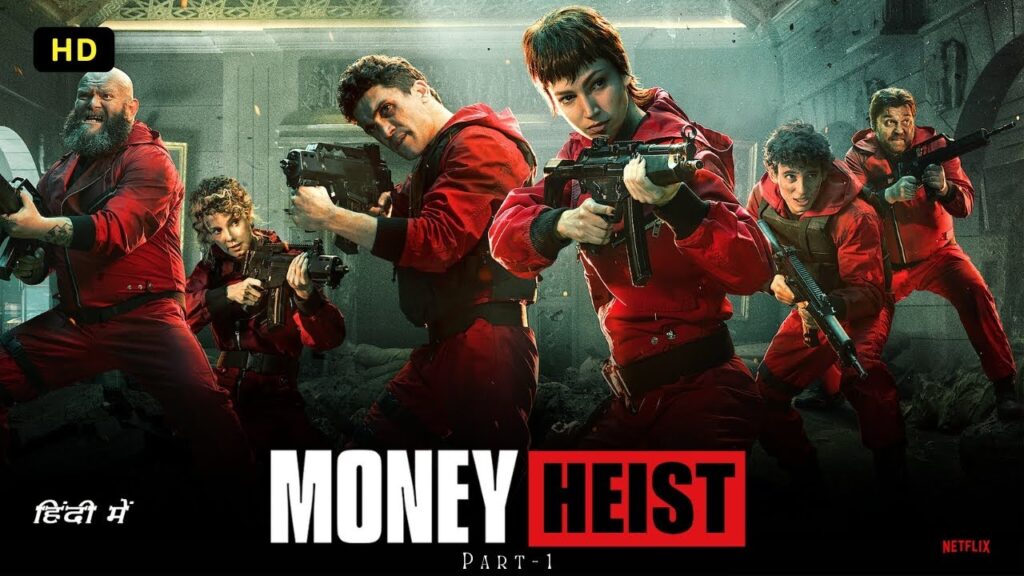
Money Heist (La Casa de Papel) is one of the most captivating television programs in recent history. What began as a modestly anticipated Spanish series quickly became one of Netflix’s biggest global sensations. Money Heist evolved from a concert into a cultural movement, complete with the recognizable Dali masks and the catchy “Bella Ciao” tune.
However, what was so unique about it? Was it the characters, the tension, or the unadulterated emotional depth that lay underlying the exciting story of a heist? Let’s examine why Money Heist became a worldwide obsession and dig into a thorough season-by-season analysis.
Seasons One and Two: The Ideal Heist
The first two episodes of Money Heist, which was first shown as a single season in Spain, introduced us to The Professor (Álvaro Morte), a master criminal who has a scheme to rob the Royal Mint of Spain, the largest heist in history.
Not only were his gang of robbers named after cities (Tokyo, Berlin, Nairobi, Rio, Denver, Moscow, Helsinki, and Oslo), but they were also complicated people with complicated histories, feelings, and weaknesses.

Each episode concluded on a suspenseful note.
Instead of supporting the police, viewers began to feel sorry for the robbers.
The intricate tie between The Professor and Inspector Raquel Murillo, as well as relationships like Tokyo and Rio, gave the story more emotional weight.
Despite its dubious morals, Pedro Alonso’s Berlin won over many fans.
Bigger, Louder, Riskier in Seasons Three and Four
The acquisition of Netflix resulted in increased funding and worldwide distribution. The focus of the tale changed from the Mint to a more audacious scheme: robbing the Bank of Spain.
Nairobi’s Leadership: Nairobi became the group’s lifeblood.
Palermo’s Introduction: Chaos and genius were brought by the new persona.
Action Overload: The show became a blockbuster due to explosions, shootouts, and military involvement.
Emotional Punch: Fans were horrified by Nairobi’s tragic fate in Season 4.
The emotional depth and breathtaking action of these seasons kept viewers captivated, despite criticism that they dragged out the plot and lost the sharp rhythm of previous installments.

Final Season 5: The End of an Era
The narrative was concluded with dramatic action and poignant resolution in the final season, which was divided into two volumes.
The Development of the Professor: His journey from anxious tactician to serene genius came full circle.
One of the show’s most heartbreaking scenes is Tokyo’s Sacrifice.
The program was always about revolt, resistance, and the strength of solidarity, even after the theft.
Fans had satisfactory (although bittersweet) endings as a result of Denver’s hardships, Rio’s suffering, and Alicia Sierra’s surprising partnership with the Professor.
Message:
No one can dispute the cultural imprint the ending left behind, despite the fact that some fans thought it was ideal and others thought it was too convenient.
The Show’s Characters That Made It
The ultimate mastermind, composed, wise, and ethically torn.

Her passionate yet careless narration served as the series’ beating heart.

haughty, endearing, and memorable.

The gang’s emotional fulcrum, brave, and affectionate.

Emotion and youthful vitality.

The wildcard who changed the course of events in subsequent seasons was Alicia Sierra.
Because each character had depth, fans were able to relate to them personally.
Why Global Money Theft Operated
.Opposition to power structures is universal.
Audiences were captivated by the suspense, narrations, and non-linear flashbacks.
The Dali mask and red costume became global icons of disobedience.
Money Heist moved us to tears just as much as it did to laughter, in contrast to many thrillers.
Conclusion: A Program That Shaped a Generation
The narrative of Money theft was more than just a theft. It was about rebellion, love, loss, and the human will to resist persecution. The series as a whole is still regarded as one of the most influential worldwide hits of the 2010s and 2020s, despite the fact that not every season was perfect.
It provided us with memorable characters, exciting action, and moments that will always be a part of popular culture.
Money Heist remains as compelling, potent, and poignant for viewers to replay in 2025 as it did when they first saw it.