The Addams Family has haunted pop culture for decades. From Charles Addams’s darkly humorous cartoons in The New Yorker, to the beloved 1990s movies that made Wednesday Addams an icon of deadpan sarcasm, the family has always thrived on a peculiar balance of horror and comedy. Netflix’s Wednesday, released in November 2022, entered this long tradition with a modern twist: what if Wednesday, the daughter of the infamous family, became the center of her own story?
Helmed by Tim Burton (in his long-awaited television debut) and brought to life by the extraordinary Jenna Ortega, Wednesday Season 1 instantly became a cultural phenomenon. The show fused gothic aesthetics, quirky humor, and YA-style drama, creating something both nostalgic and fresh. Within days of release, Ortega’s performance went viral, her dance scene became a global meme, and the series broke Netflix records. But beneath the hype lies a question: how strong was Season 1 as a piece of storytelling? Did it deliver more than just TikTok moments?
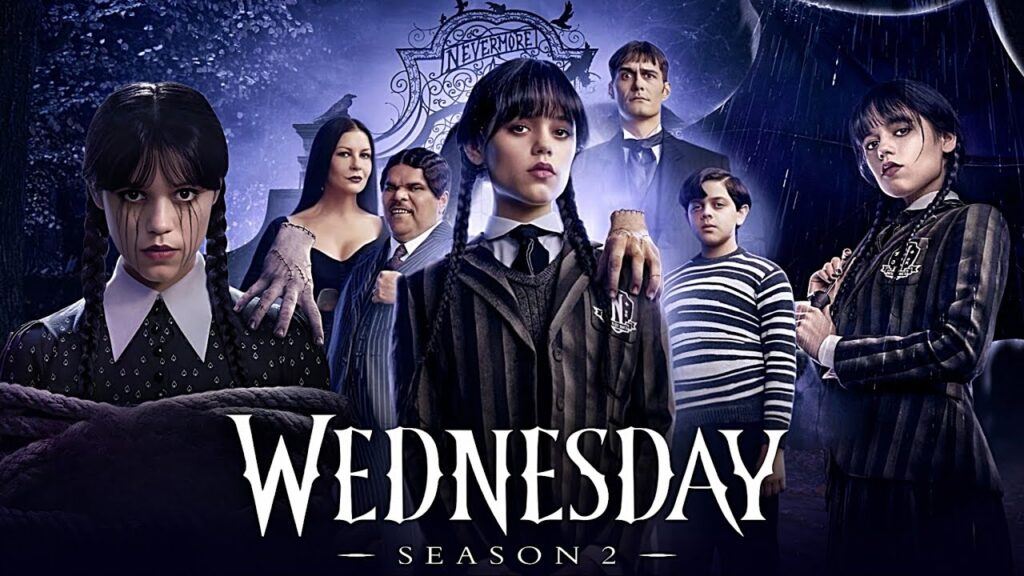
In this review, we’ll dive deep into the world of Nevermore Academy, analyze the show’s themes, explore the performances, and reflect on why Wednesday resonated so strongly with audiences.

The World of Nevermore: A Gothic Playground
At the heart of Wednesday Season 1 is Nevermore Academy, a boarding school for outcasts. The choice of setting is clever—it instantly sets Wednesday apart from generic teen dramas by placing her in a world where vampires, werewolves, and sirens coexist. Yet, even among “outcasts,” Wednesday remains an outsider, a girl whose darkness runs deeper than most.
The aesthetic of Nevermore is pure Tim Burton: looming spires, mist-covered woods, and interiors that balance elegance with eeriness. The school becomes a character in itself, holding secrets in its walls and forests. The set design and color palette—icy blues, monochrome blacks, and gothic purples—immerse us in Wednesday’s worldview. Unlike the colorful chaos of most high school shows, Wednesday builds an environment where gloom is the norm, making Wednesday’s bleakness oddly relatable.
Jenna Ortega’s Triumph: Redefining Wednesday
Casting Jenna Ortega as Wednesday was perhaps the single most important decision the show made—and it paid off spectacularly. Ortega doesn’t merely imitate Christina Ricci’s beloved 1990s version; she reinvents Wednesday for a new era.
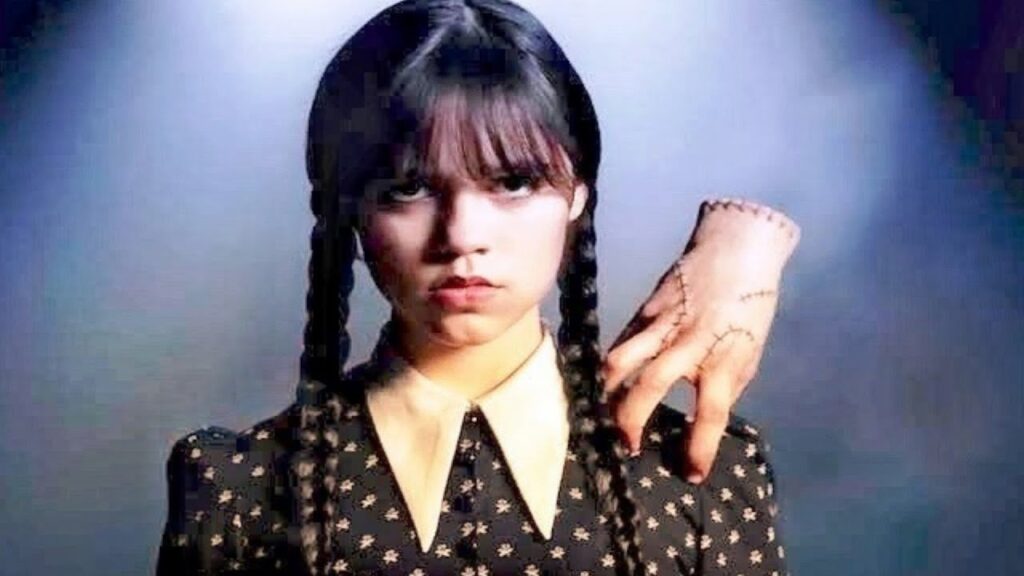
Her stillness, monotone voice, and piercing glare capture Wednesday’s iconic deadpan personality. Yet Ortega adds nuance. She gives us a teenager on the cusp of self-discovery, whose sharp wit hides a yearning for connection. Her chemistry with Emma Myers (Enid) balances Wednesday’s darkness with genuine warmth. And of course, Ortega’s self-choreographed dance during the Rave’N is already the stuff of TV legend—a moment that encapsulates her uniqueness and sparked countless TikTok imitations.
What makes Ortega’s Wednesday work is restraint. In lesser hands, the character might have been reduced to a cartoonish goth stereotype. Ortega grounds her with humanity, making her someone who can both outwit bullies with sarcasm and slowly learn the value of friendship.
Supporting Cast: A Gallery of Misfits
While Ortega commands the screen, Wednesday wouldn’t work without its colorful supporting cast:
- Enid Sinclair (Emma Myers):
- Wednesday’s werewolf roommate is her polar opposite—cheerful, colorful, bubbly. Their “odd couple” dynamic drives much of the season’s heart. Enid’s struggle with “wolfing out” parallels real teenage anxieties about identity and acceptance, making her more than comic relief.
- Tyler Galpin (Hunter Doohan):
- Introduced as a charming normie barista, Tyler becomes central to both Wednesday’s emotional arc and the season’s mystery. His eventual reveal as the Hyde was shocking for some, predictable for others, but undeniably pivotal.
- Xavier Thorpe (Percy Hynes White):
- The tortured artist with a mysterious connection to the Hyde murders. Though he often feels like a typical YA “love interest,” Xavier also represents how Wednesday struggles to trust even those who genuinely care.
- Bianca Barclay (Joy Sunday):
- Initially framed as a rival “mean girl,” Bianca evolves into one of the most complex characters. As a siren, she wrestles with the stigma of her powers, ultimately revealing vulnerabilities that make her a fan favorite.
- Principal Weems (Gwendoline Christie):
- Elegant, secretive, and authoritative, Weems embodies the gothic headmistress archetype. Her mysterious aura keeps viewers guessing until the end.
- Morticia & Gomez Addams (Catherine Zeta-Jones and Luis Guzmán):
- While their screen time is limited, they remind us that Wednesday exists within a larger family legacy. Their dynamic shows Wednesday’s resistance to parental influence, while also hinting at her eventual reconciliation with her roots.
This ensemble enriches the series, ensuring that Nevermore feels like a living, breathing community rather than just a backdrop.
Plot & Mystery: Whodunit in the Gothic Woods
At its core, Wednesday is a mystery series wrapped in teen drama. Season 1 builds around a classic whodunit: students and townsfolk are being murdered by a monstrous creature. Wednesday, with her deductive skills and prophetic visions, takes on the case.
The mystery unfolds with plenty of red herrings—could it be Xavier, the tortured artist? Could Principal Weems be hiding something? Or is the threat tied to the town’s old history with outcasts? The eventual revelation—that Tyler is the Hyde, manipulated by Marilyn Thornhill (Christina Ricci)—connects Wednesday’s investigation with deeper themes of betrayal, prejudice, and legacy.
Some critics argued the pacing dragged in the middle episodes, with too much focus on love triangles. Others felt the Hyde reveal was predictable. Still, the structure of Wednesday’s mystery keeps viewers engaged, offering just enough twists to maintain suspense.
Themes: Outsiders, Identity, and Belonging
One reason Wednesday resonates with audiences is its thematic depth.
- Outsider Identity:
- At Nevermore, even “outcasts” have cliques. Wednesday’s struggle to find belonging mirrors the universal teenage experience of feeling like you don’t fit in—exaggerated through gothic metaphors.
- Friendship:
- Wednesday’s reluctant bond with Enid is the emotional heartbeat of Season 1. Their friendship arc—moving from irritation to genuine care—gives the show warmth amid the gloom.
- Family Legacy:
- Wednesday resists becoming like her mother, Morticia, yet her investigation forces her to confront her family’s past. The tension between individuality and heritage drives much of her growth.
- Prejudice and Power:
- The town of Jericho’s hostility toward Nevermore students reflects real-world issues of exclusion and fear of difference. Characters like Bianca embody how power (her siren voice) can become both gift and curse in such contexts.
Through these themes, Wednesday avoids being just a quirky teen show. It becomes a reflection on adolescence, identity, and the universal desire to be seen.
Visual Style & Music: Burton’s Stamp
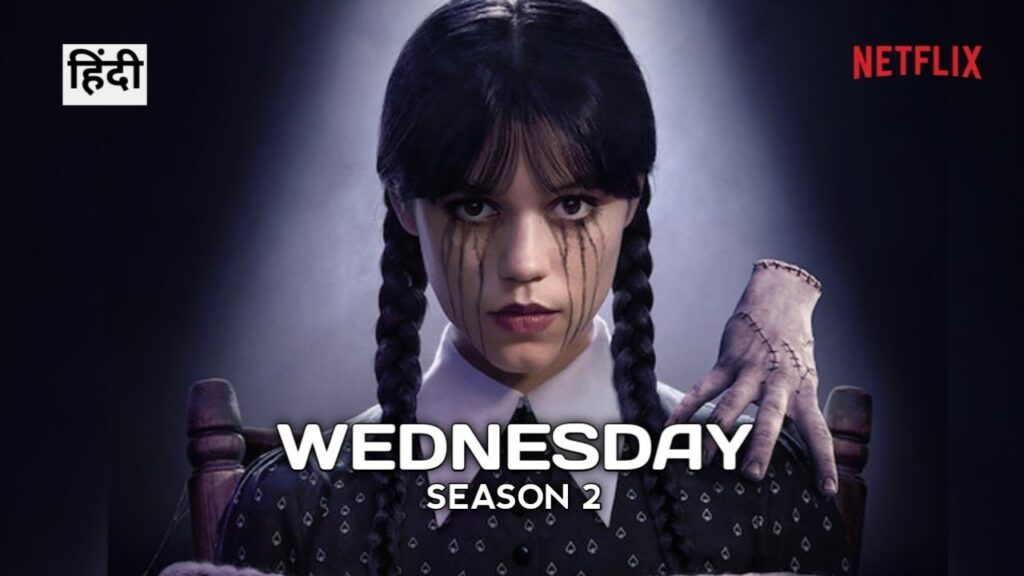
Visually, Wednesday thrives under Tim Burton’s influence. The show’s gothic sets, shadow-drenched forests, and Victorian-inspired costumes all scream Burtonesque. Yet, there’s restraint—Wednesday avoids becoming too cartoonish, keeping a balance between stylization and realism.
The costume design deserves special mention. Wednesday’s wardrobe—variations of black-and-white, sharp collars, and Victorian silhouettes—has already influenced fashion trends. Meanwhile, Enid’s rainbow hues create the perfect foil, making every scene with the two visually dynamic.
Music, composed by Danny Elfman and Chris Bacon, complements this atmosphere beautifully. The harpsichords, cellos, and eerie tones underline Wednesday’s macabre aura while still feeling playful. The Rave’N dance sequence, set to The Cramps’ “Goo Goo Muck,” became iconic not just because of Ortega’s moves, but because the show’s sound design embraced its gothic-punk roots.
Strengths of Season 1
-
- Jenna Ortega’s star-making performance
-
- Gothic aesthetic and production design
-
- Relatable themes of identity and belonging
-
- A strong balance between humor and darkness
-
- Memorable moments that transcended the show (the dance, Thing’s loyalty, Enid’s wolfing out)
Weaknesses & Critiques
-
- Pacing issues in the middle episodes
-
- Teen drama clichés (love triangles, predictable conflicts)
-
- Hyde reveal somewhat telegraphed
-
- Some supporting characters underdeveloped (e.g., Xavier)
-
- Occasional tonal imbalance—was it horror, comedy, or teen drama?
Despite these flaws, the series never collapses under its own weight. Its charm and Ortega’s magnetism carry it through.
Cultural Impact: From Screens to TikTok
Few shows in recent memory have dominated culture like Wednesday. Ortega’s dance went viral on TikTok, spawning millions of recreations. Fashion brands capitalized on the goth-core revival. The show became Netflix’s second-most-watched English-language series at the time, trailing only Stranger Things 4.
Beyond metrics, Wednesday resonated with young audiences who saw themselves in her outsider status. Fans embraced Enid and Wednesday’s dynamic as a symbol of unlikely but authentic friendship. Even debates about queer coding, representation, and inclusivity sparked discussions that extended the show’s cultural footprint.
Final Verdict
Wednesday Season 1 is not flawless, but it’s undeniably impactful. It reintroduced a classic character for a new generation, made Jenna Ortega a household name, and delivered a blend of gothic mystery and teen drama that struck a chord worldwide.
It thrives when it leans into its gothic humor, heartfelt character dynamics, and stylish aesthetics. It stumbles when it indulges too much in YA clichés. Yet, overall, it manages to balance being entertaining, culturally relevant, and surprisingly emotional.
Closing Thoughts
In the end, Wednesday Season 1 feels like both a love letter to the Addams Family legacy and a fresh start. Ortega’s performance ensures Wednesday is no longer just a side character in her family’s macabre circus—she is the star of her own twisted coming-of-age story.